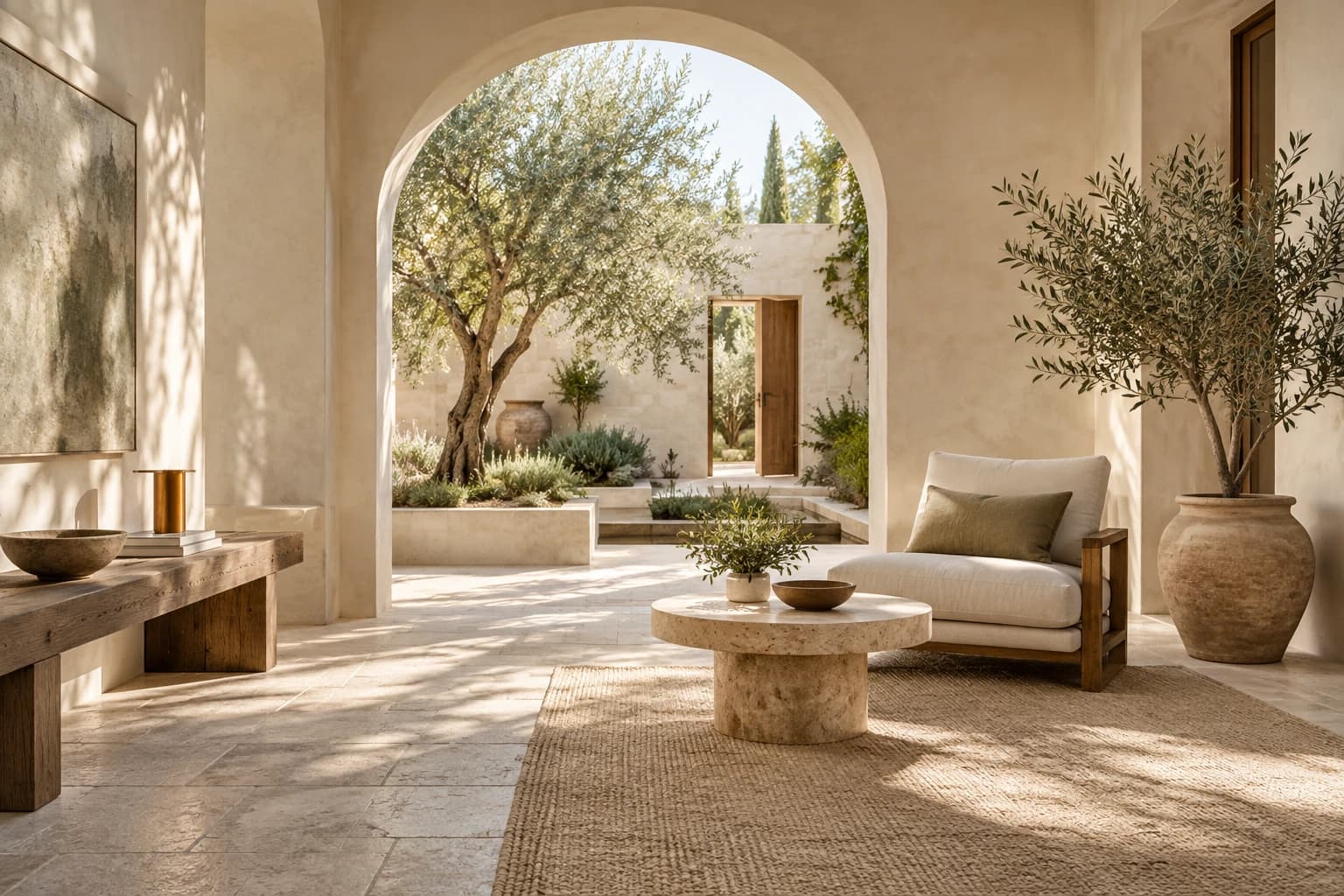
In a 3D image, light reveals more than texture: it establishes time, scale and the emotional reading of an interior.
One room can feel intimate or wonderfully open depending on the time of day. We treat lighting as part of the spatial language rather than a final visual effect applied after the design is finished.
Interior imagery works best when three layers are considered independently: daylight entering through existing openings, functional light for movement and tasks, and accent light that creates depth. Mixing them without intention can make materials look unconvincing.
Pale stone returns soft reflections, darker timber absorbs more light, and glass introduces highlights. Keeping these relationships coherent allows finishes to be evaluated, not just admired as decoration.
Before rendering, choose a simple intention: a calm morning, warm late afternoon or evening use. Camera position, contrast and colour temperature can then work together to tell one consistent visual story.